Dr. Stanislav Mazurenko

Team leader, AI in Protein Engineering
Loschmidt Laboratories

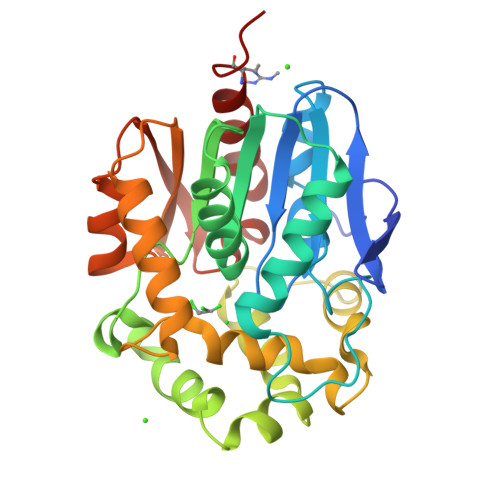
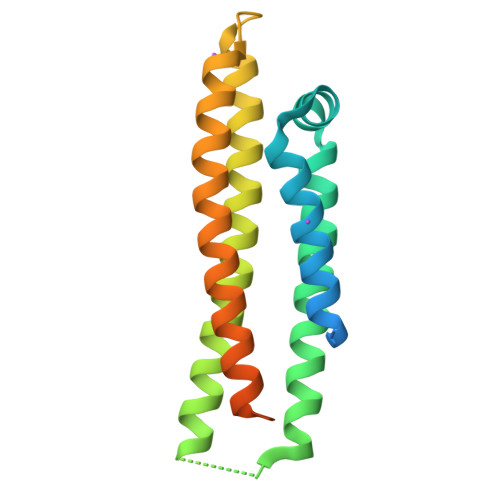
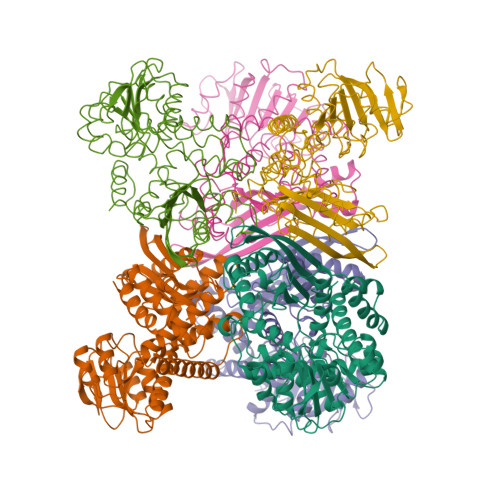
I lead a team developing advanced data analysis methods and ML-based algorithms to understand structure-function relationships in proteins, decipher mechanisms of Alzheimer’s disease, develop novel drugs for acute stroke, and improve enzymes for biotechnological applications. This is a fascinating area of research at the interface of biochemistry, biophysics, computer science, and mathematics. We use experimental measurements, protein sequences, structures, and simulations to gain insights into biology and create reliable tools for the design of improved protein variants. Have a look at our web servers here.
Current Team

Dr. Joan Planas Iglesias
structural bioinformatics
since 2024

Karen Pailozian
machine learning in bioinformatics
since 2022

Pavel Kohout
machine learning in protein engineering
since 2019

Martin Richter
machine learning in enzyme kinetics
since 2024

Petr Kouba
machine learning in protein dynamics
since 2023 (with CVUT)

Alumni
David Harding-Larsen, PhD (2026 with DTU)
Faraneh Haddadi, PhD (2026)
Ing. Jan Velecký, PhD (2025)
Ing. David Lacko (2025)
Bc. Matej Demovič (2025)
Mgr. Michal Bubenik (2022)

Collaborators

Publications

Highlights

Kouba P, Kohout P, Haddadi F, Bushuiev A, Samusevich R, Sedlar J, Damborsky J, Pluskal T*, Sivic J*, Mazurenko S*. Machine Learning-Guided Protein Engineering. ACS Catalysis. 2023; 13: 13863-13895 (doi);

Kohout P, Vasina M, Majerova M, Novakova V, Damborsky J, Bednar D, Marek M, Prokop Z*, Mazurenko S*. Engineering Dehalogenase Enzymes using Variational Autoencoder-Generated Latent Spaces and Microfluidics. JACS Au. 2025; 5(2):838-50 (doi);

Marques SM, Kouba P, Legrand A, Sedlar J, Disson L, Planas-Iglesias J, Sanusi Z, Kunka A, Damborsky J, Pajdla T, Prokop Z, Mazurenko S*, Sivic J*, Bednar D*. CoVAMPnet: Comparative Markov State Analysis for Studying Effects of Drug Candidates on Disordered Biomolecules. JACS Au. 2024; 4(6):2228-45 (doi, );

Mazurenko S*, Prokop Z, Damborsky J. Machine Learning in Enzyme Engineering. ACS Catalysis. 2020; 10: 1210-1223; also part of the special Virtual Issue: Blurring the Lines Between Catalysis Subdisciplines (doi, RG);

Stourac J, Dubrava J, Musil M, Horackova J, Damborsky J, Mazurenko S*, Bednar D*. FireProtDB: Database of Manually Curated Protein Stability Data. Nucleic Acids Research. 2021; 49: D319-324 (doi, web);

Full list

  • Harding-Larsen D, Lax BM, Weingarten CK, Sako A, Mazurenko S*, Welner DH*. Data-Efficient Distal Engineering of Fluorinase Using Zero-Shot Models. Chem Bio Eng. 2026 (doi)
  • Kohout P et al. FireProtASR 2.0: Evolution-Guided Design of Protein Ancestors and Successors with Phylogenetics and Machine Learning. Briefings In Bioinformatics. 2026 (doi)
  • Haddadi F et al. ProtXAI: Explainable AI Reveals Structural Determinants of Protein Dynamics. 2026 (bioRxiv)
  • Vasina et al. CascadeMAP: Autonomous Closed-loop Optimization of Enzyme Cascades via Microfluidics, Machine Learning and Agentic AI. 2026 (bioRxiv)
  • Pailozian K et al. Investigation of Protein Melting Temperature Prediction with Cross-Method Validation on Biophysical Data. 2026 (bioRxiv)
  • Marques S et al. Mobilizing the Biocatalysis Community for Reproducible and Reusable Data Collection. ACS Catalysis. 2026 (doi)
  • Legrand A et al. Taurine Inhibits Apolipoprotein E4 Aggregation. Biomedicine & Pharmacotherapy. 2026 (doi)
  • Damborsky et al. A Room Full of Experts, None of Them Human: Multi-Agent AI as Virtual Research Teams. 2026 (chemRxiv)
  • Legrand A et al. Investigating the Conformational Flexibility of Staphylokinase Across Multiple Time Scales. 2026 (bioRxiv)
  • Kopko J et al. Generalization Beyond Benchmarks: Evaluating Learnable Protein-Ligand Scoring Functions on Unseen Targets. NeurIPS 2025 Workshop AI4Science. 2025 (arXiv).
  • Musil M et al. FireProtDB 2.0: Large-Scale Manually Curated Database of the Protein Stability Data. Nucleic Acids Research. 2025; gkaf1211 (doi, website);
  • de Boer RM, Harding-Larsen D, Mazurenko S, Welner DH*. Tryptophanase Mining and Characterization Towards the Biological Production of Indole Derivatives. ACS Omega. 2025 (doi, arXiv)
  • Velecky J et al. SoluProtMut: Siamese Deep Learning for Predicting Solubility Effects of Protein Mutations with Experimental Validation. bioRxiv. 2025 (arXiv);
  • Štulajterová M et al. Assessing the Impact of His-Tags on Activity and Stability of Staphylokinase Variants. International Journal of Biological Macromolecules. 2025; 147655 (doi);
  • Kouba P, Planas-Iglesias J, Damborsky J, Sedlar J, Mazurenko S, Sivic J*. Learning to Engineer Protein Flexibility. ICLR 2025 (openreview, git, arXiv);
  • Khan RT et al. Anticipating Protein Evolution with Successor Sequence Predictor. Journal of Cheminformatics. 2025; 17(1):34 (doi);
  • Kohout P et al. Engineering Dehalogenase Enzymes using Variational Autoencoder-Generated Latent Spaces and Microfluidics. JACS Au. 2025; 5(2):838-50 (doi);
  • Attafi OA et al. DOME Registry: Implementing community-wide recommendations for reporting supervised machine learning in biology. GigaScience. 2024; 13 (doi, arXiv);
  • Damborsky J, Kouba P, Sivic J, Vasina M, Bednar D, Mazurenko S*. Quantum computing for faster enzyme discovery and engineering. Nature Catalysis. 2025; 8:872–880 (doi, arXiv);
  • Domínguez-Romero E* et al. Making PBPK Models More Reproducible in Practice. Briefings in bioinformatics. 2024; 25(6):bbae569 (doi, zenodo);
  • Vavra O et al. Large-Scale Annotation of Biochemically Relevant Pockets and Tunnels in Cognate Enzyme-Ligand Complexes. Journal of Cheminformatics. 2024; 16(1):114 (doi, git, arXiv);
  • Harding-Larsen D et al. Protein Representations: Encoding Biological Information for Machine Learning in Biocatalysis. Biotechnology Advances. 2024 (doi, arXiv);
  • Velecky J, Berezny M, Musil M, Damborsky J, Bednar D, Mazurenko S*. BenchStab: A Tool for Automated Querying of Web-Based Stability Predictors. Bioinformatics. 2024; btae553 (doi, zenodo, git, web);
  • Khan RT et al. Analysis of mutations in precision oncology using the automated, accurate, and user-friendly web tool PredictONCO. CSBJ. 2024 (doi);
  • Marques SM et al. CoVAMPnet: Comparative Markov State Analysis for Studying Effects of Drug Candidates on Disordered Biomolecules. JACS Au. 2024; 4(6):2228-45 (doi, arXiv);
  • Khan RT et al. A computational workflow for analysis of missense mutations in precision oncology. Journal of Cheminformatics. 2024; 16(1):86 (doi);
  • Harding-Larsen D et al. GASP: A Pan-Specific Predictor of Family 1 Glycosyltransferase Acceptor Specificity Enabled by a Pipeline for Substrate Feature Generation and Large-Scale Experimental Screening. ACS Omega. 2024. (doi, git, arXiv);
  • Bushuiev A et al. Revealing Data Leakage in Protein Interaction Benchmarks. GEM workshop, ICLR, 2024. (arXiv);
  • Bushuiev A et al. Learning to Design Protein-Protein Interactions with Enhanced Generalization. ICLR 2024. (arXiv, openreview, git, HF);
  • Martin HG, Mazurenko S, Zhao H. Special Issue on Artificial Intelligence for Synthetic Biology (editorial). ACS Synthetic Biology. 2024; 13: 408-410 (doi);
  • Stourac J et al. PredictONCO: a Web Tool Supporting Decision-Making in Precision Oncology by Extending the Bioinformatics Predictions with Advanced Computing and Machine Learning. Briefings in Bioinformatics. 2024; 25: 1-10. (doi, git, web);
  • Kouba P et al. Machine Learning-Guided Protein Engineering. ACS Catalysis. 2023; 13: 13863-13895 (doi);
  • Mican J et al. Exploring New Galaxies: Perspectives on the Discovery of Novel PET-Degrading Enzymes. Applied Catalysis B: Environmental. 2023; 324: 123404 (doi);
  • Vasina M et al*. In-Depth Analysis of Biocatalysts by Microfluidics: An Emerging Source of Data for Machine Learning. Biotechnology Advances. 2023; 66: 108171 (doi);
  • Velecky J et al. SoluProtMutDB: a Manually Curated Database of Protein Solubility Changes upon Mutations. Computational and Structural Biotechnology Journal. 2022; 20: 6339-6347 (doi, web);
  • Vasina M et al. Advanced Database Mining of Efficient Haloalkane Dehalogenases by Sequence and Structure Bioinformatics and Microfluidics. Chem Catalysis. 2022; 2: 2704-2725 (doi);
  • Kunka A, Lacko D, Stourac J, Damborsky J, Prokop Z, Mazurenko S*. CalFitter 2.0: Leveraging the Power of Singular Value Decomposition to Analyse Protein Thermostability. Nucleic Acids Research. 2022; 50: W145-W151 (doi, web);
  • Vasina M et al. Tools for Computational Design and High-Throughput Screening of Therapeutic Enzymes. Advanced Drug Delivery Reviews. 2022; 183: 114143 (doi);
  • Kokkonen P, Beier A, Mazurenko S, Damborsky J, Bednar D*, Prokop Z*. Substrate Inhibition by the Blockage of Product Release and Its Control by Tunnel Engineering. RSC Chemical Biology. 2021; 2: 645-655 (doi, arXiv);
  • Clason C, Mazurenko S, Valkonen T*. Primal-Dual Proximal Splitting and Generalized Conjugation in Non-Smooth Non-Convex Optimization. Applied Mathematics and Optimization. 2021; 84: 1239-1284 (doi, arXiv);
  • Stourac J et al. FireProtDB: Database of Manually Curated Protein Stability Data. Nucleic Acids Research. 2021; 49: D319-324 (doi, web);
  • Mazurenko S, Jauhiainen J, Valkonen T*. Primal-Dual Block-Proximal Splitting for a Class of Non-Convex Problems. Electronic Transactions on Numerical Analysis. 2020; 52: 509-552(doi, arXiv);
  • Mazurenko S*. Predicting Protein Stability and Solubility Changes upon Mutations: Data Perspective. ChemCatChem. 2020; 12: 1-10 (doi);
  • Mazurenko S*, Prokop Z, Damborsky J. Machine Learning in Enzyme Engineering. ACS Catalysis. 2020; 10: 1210-1223 (doi, RG); the article was also included as part of the special Virtual Issue: Blurring the Lines Between Catalysis Subdisciplines;
  • Clason C, Mazurenko S, Valkonen T*. Acceleration and Global Convergence of a First-Order Primal-Dual Method for Nonconvex Problems. SIAM Journal on Optimization. 2019; 29: 933-963 (doi, arXiv);
  • Nevolova S, Manaskova E, Mazurenko S, Damborsky J, Prokop Z*. Development of Fluorescent Assay for Monitoring of Dehalogenase Activity. Biotechnology journal. 2019; 14: 1800144 (doi);
  • Mazurenko S et al. CalFitter: A Web Server for Analysis of Protein Thermal Denaturation Data. Nucleic Acids Research. 2018; 46: W344-349 (doi, web);
  • Beerens K et al. Evolutionary Analysis As a Powerful Complement to Energy Calculations for Protein Stabilization. ACS Catalysis. 2018; 8: 9420-9428 (doi, RG);
  • Mazurenko S, Bidmanova S, Kotlanova M, Damborsky J, Prokop Z*. Sensitive Operation of Enzyme-Based Biodevices by Advanced Signal Processing. PLOS One. 2018; 13: e0198913 (doi, RG);
  • Dvorak P et al. Computer-Assisted Engineering of Hyperstable Fibroblast Growth Factor 2. Biotechnology and Bioengineering. 2018; 115: 850-862 (doi, RG);
  • Mazurenko S*. Viscosity Solutions to Evolution Problems of Star-Shaped Reachable Sets. Nonlinear Differential Equations and Applications NoDEA. 2018; 25 (doi, RG);
  • Mazurenko S*, Damborsky J, Prokop Z. Multi-Enzyme Pathway Optimization Through Star-Shaped Reachable Sets. Advances in Intelligent Systems and Computing. 2017; 616: 9-17 (doi, RG);
  • Mazurenko S, Kunka A, Beerens K, Johnson CM, Damborsky J, Prokop Z. Exploration of Protein Unfolding by Modelling Calorimetry Data from Reheating. Scientific reports. 2017; 7: 16321 (doi, RG).
  • Mazurenko S*. Partial Differential Equation for Evolution of Star-Shaped Reachability Domains of Differential Inclusions. Set-Valued and Variational Analysis. 2016; 24: 333-354 (doi, RG);
  • Mazurenko S*. A Differential Equation for the Gauge Function of the Star-Shaped Attainability Set of a Differential Inclusion. Doklady Mathematics. 2012; 86: 139-142 (doi, RG);
  • Mazurenko S*. The Dynamic Programming Method in Systems with States in the Form of Distributions. Moscow University Computational Mathematics and Cybernetics. 2011; 35: 133-141 (doi, RG);